



Which Power Tube Wins: EL34 for Marshall or 6L6 for Fender?
If you’ve spent any time chasing the "perfect" guitar tone, you know that the quest usually leads to the back of your amplifier. While speakers and pickups get a lot of glory, the real heart of your sound lives in the glass. Specifically, the power tubes.
In the world of vacuum tube amplifiers, no rivalry is more storied than EL34 vs 6L6. It is the ultimate tonal crossroads: the aggressive, mid-forward "British" growl versus the glassy, high-headroom "American" chime.
Whether you are looking to retube a classic Marshall, freshen up a Fender Twin, or you're a builder looking for the right foundation for your next project, understanding these two titans is essential. In this deep-dive guide, we’ll break down the physics, the feel, and the sonic signatures of these tubes to help you choose the best EL34 power tubes or best 6L6 power tubes for your specific rig.
The EL34: The Soul of British Rock
When people talk about the "British Sound," they are talking about the EL34. Originally developed by Mullard in the 1950s, this pentode tube became the standard for legendary manufacturers like Marshall, Hiwatt, and Orange.
If you close your eyes and imagine the sound of a 1960s Plexi dimed on a stage, or the percussive "kerrang" of a classic AC/DC riff, you are hearing the EL34 Marshall tone.
Tonal Profile of the EL34
The EL34 is famous for its tight low end and strong upper-midrange bite. Unlike other tubes that can sound "scooped," the EL34 pushes the frequencies where the guitar lives. This makes it incredibly effective at cutting through a loud drummer and a bassist in a live mix.
-
Earlier Breakup: One of the defining features of the EL34 is its EL34 breakup tone. These tubes tend to saturate earlier than 6L6s. When they do, they produce a rich, harmonically dense distortion that feels "creamy" and "compressed."
-
Aggressive Attack: There is an immediacy to the EL34. It’s a "fast" tube that responds well to aggressive pick attacks, making it the go-to for hard rock and heavy metal.
-
Harmonic Richness: As the tube enters saturation, it generates complex even-order harmonics that give lead lines a "singing" quality.
If your goal is classic rock crunch or high-gain saturation that doesn't get "woofy" in the low end, you should look to buy EL34 tubes for your power section.
The 6L6: The King of American Clean
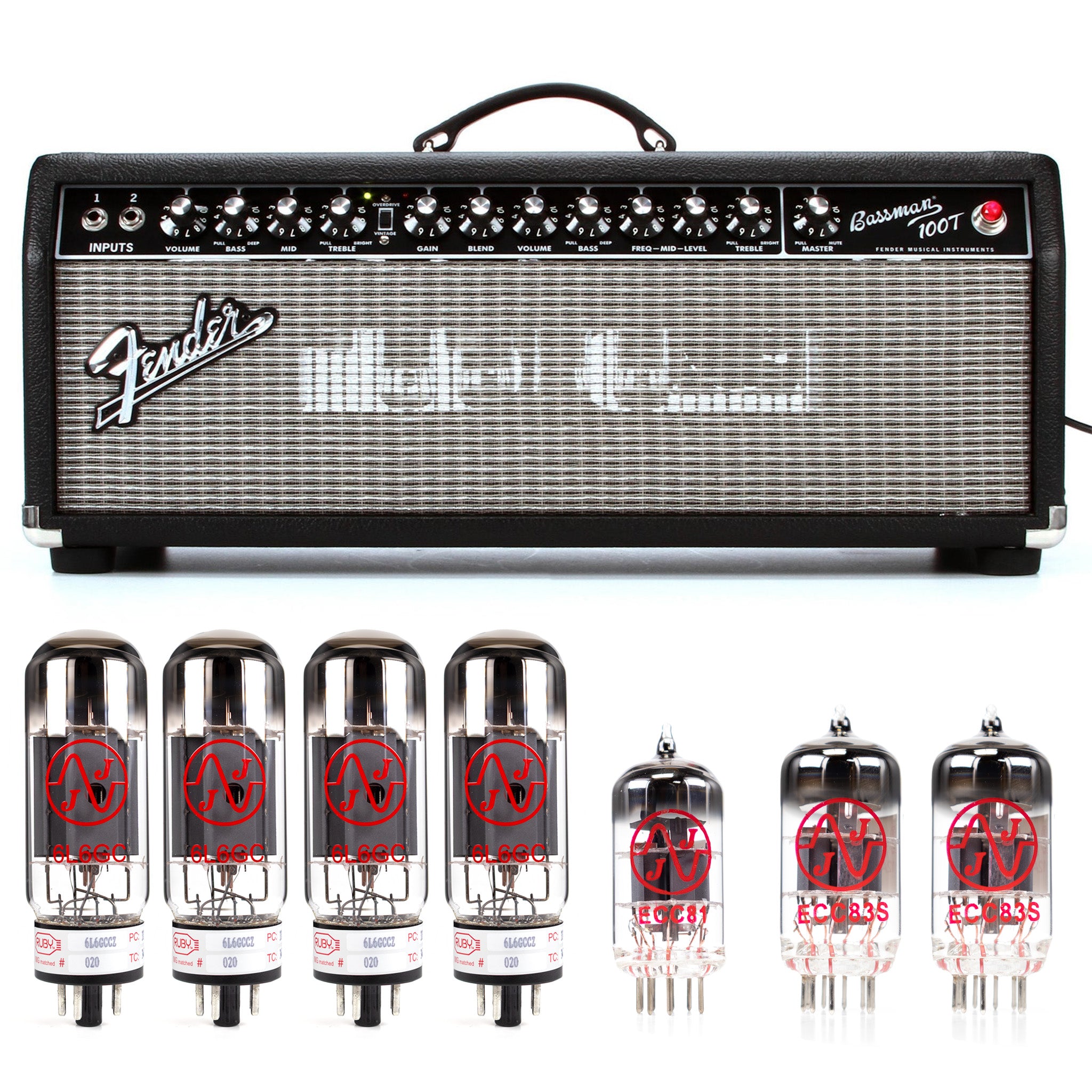
On the other side of the Atlantic, the 6L6 was the tube that built the American empire of sound. Introduced by RCA, the 6L6 is a "beam power" tetrode that became the backbone of the Fender line—from the Bassman to the Super Reverb and the legendary Twin Reverb.
The 6L6 Fender tone is often described as "hi-fi" in comparison to the EL34. It offers a wider frequency response that feels massive and expensive.
Tonal Profile of the 6L6
The 6L6 is known for its glassy highs and warm, deep lows. It produces a "scooped" midrange, which leaves plenty of room for the shimmering top end and a robust bottom end that can handle big, clean chords without folding.
-
Bigger Clean Headroom: The primary reason players choose a 6L6 matched set is the 6L6 clean headroom. These tubes can be pushed to much higher volumes before they start to distort. This makes them the ultimate choice for jazz, country, and blues players who need their tone to stay "big and clean."
-
Smooth Mids and Wide Dynamics: When a 6L6 does finally break up, the distortion is generally smoother and "rounder" than an EL34. It has a more "breathable" dynamic response, often described as "bouncy" or "squishy."
-
The Ultimate Pedal Platform: Because 6L6 tubes provide such a wide, clean canvas, they are widely considered the best guitar amp vacuum tubes for players who rely heavily on drive pedals for their grit.
For players who want that "California sound"—sparkling cleans and a low end that thumps the floor—buy 6L6 tubes is the standard recommendation.
EL34 vs 6L6: A Side-by-Side Comparison
Deep Dive: Beyond the Basics
Breakup Characteristics and Feel
The "feel" of an amp is just as important as the frequency response. Because an EL34 tube vs 6L6 tube comparison involves different internal constructions (pentode vs. beam tetrode), they react to your playing differently.
The EL34 feels "stiff" in a way that helps rhythm playing stay articulated. Even under heavy distortion, the notes within a chord tend to remain distinct. The 6L6, however, has a "bloom." When you hit a note, it starts clean and then expands, which is why blues players love them for expressive, touch-sensitive lead playing.
Which Cuts Through the Mix Better?
If you are playing in a five-piece band with another guitar player and a keyboardist, the EL34 is usually the winner. Its natural midrange bump occupies a frequency range that isn't crowded by the bass or the cymbals.
However, if you are the only melodic instrument in a trio, the 6L6 can make the band sound "bigger" because it fills out the sub-bass and the ultra-high frequencies that an EL34 might roll off.
High Gain Applications
It’s a common misconception that 6L6s are only for "clean" players. Some of the heaviest tones in history (think Mesa/Boogie Dual Rectifier or 5150) are powered by 6L6s. In a high-gain context, the 6L6 provides a "thump" and "chunk" in the low-mids that is essential for modern metal "chugging." The EL34, by contrast, provides the "searing" lead tone favored by 80s shredders.
The Reality Check: Does the Tube Always Define the Tone?
While the EL34 vs 6L6 debate is vital, we have to acknowledge the "circuit factor." An EL34 won't magically make a Fender Princeton sound like a Marshall JCM800.
The American amp tone and British amp tone are also products of:
-
Transformer Design: How the power is delivered to the speakers.
-
Tonestack Placement: Where the EQ sits in the circuit.
-
Speaker Choice: A Celestion (UK) vs. a Jensen (USA) makes a massive difference.
However, changing your power tubes is the most effective way to "flavor" your existing amp. It is the final 20% of the tone that makes the difference between an amp you like and an amp you love.
Which Should You Buy? A Buyer's Decision Guide
Choosing the right replacement power tubes depends entirely on your playing style and your current rig. Use this quick guide to make your decision:
Choose an EL34 Matched Pair if:
-
You want that classic "Kerrang" and midrange bark.
-
You play Classic Rock, 80s Metal, or Punk.
-
You want your amp to distort at a slightly lower volume.
-
You feel your amp is currently too "thin" or "scooped."
-
Our Recommendation: Shop tested EL34 matched sets.
Choose a 6L6 Matched Set if:
-
You want "Bell-like" cleans and shimmering highs.
-
You use your amp as a "blank canvas" for a large pedalboard.
-
You play Blues, Country, Jazz, or Modern "Chug" Metal.
-
You need maximum volume before the amp starts to distort.
-
Our Recommendation: Browse premium 6L6 tubes.
Why Precision-Tested Tubes Matter
When you are ready to upgrade your amp tone today, the quality of the tube is only half the battle. The other half is matching and testing.
Vacuum tubes are handmade devices with inherent variances. If you buy two random EL34s off a shelf, one might draw significantly more current than the other. This "mismatch" can cause:
-
Unwanted hum and background noise.
-
Uneven wear (one tube burning out faster).
-
Poor tonal response and "thin" sound.
The Ruby Tubes Difference
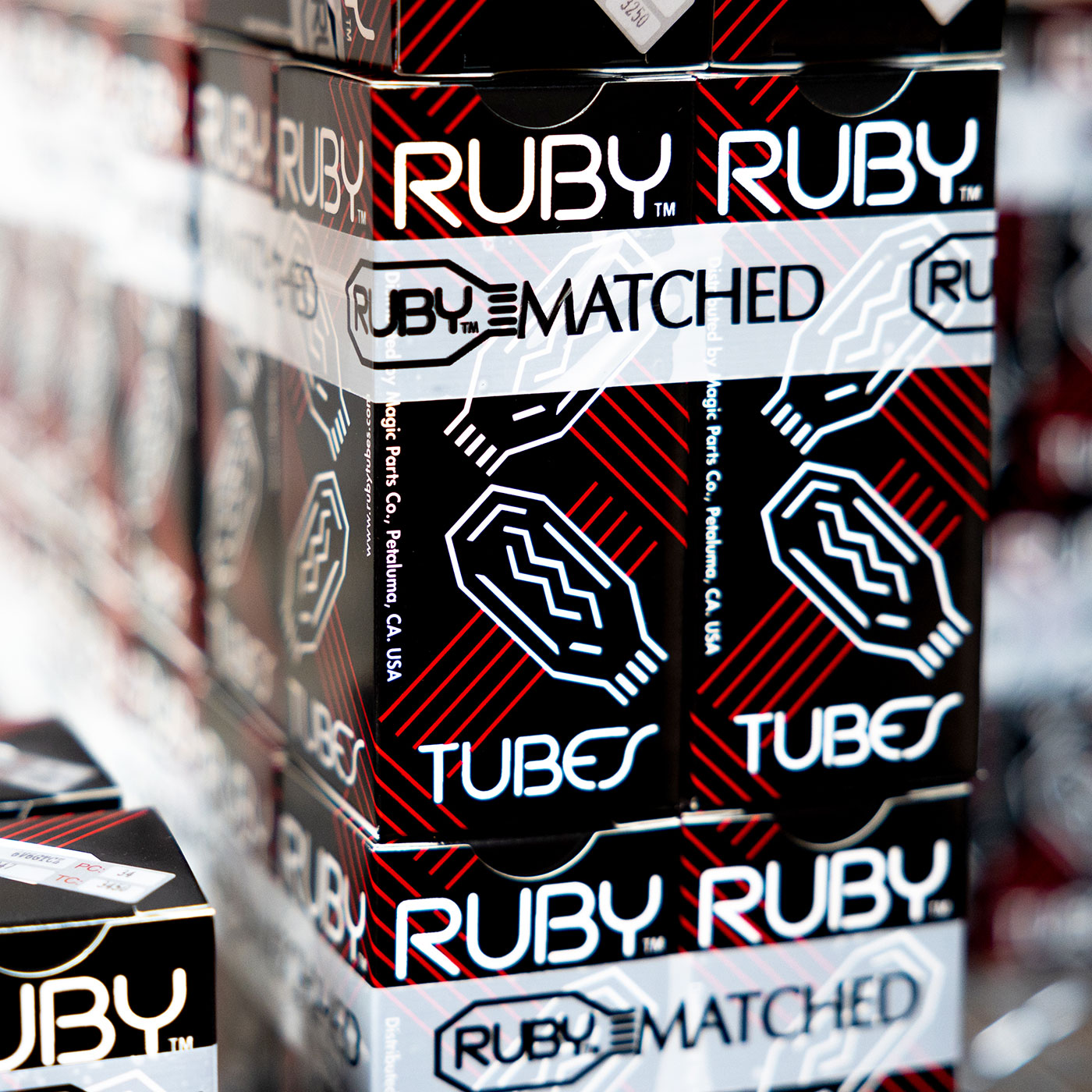
At our shop, we specialize in Ruby Tubes EL34 and Ruby Tubes 6L6 sets because of their industry-leading testing process. Every tube we sell is a tested vacuum tube.
What does that mean for you?
-
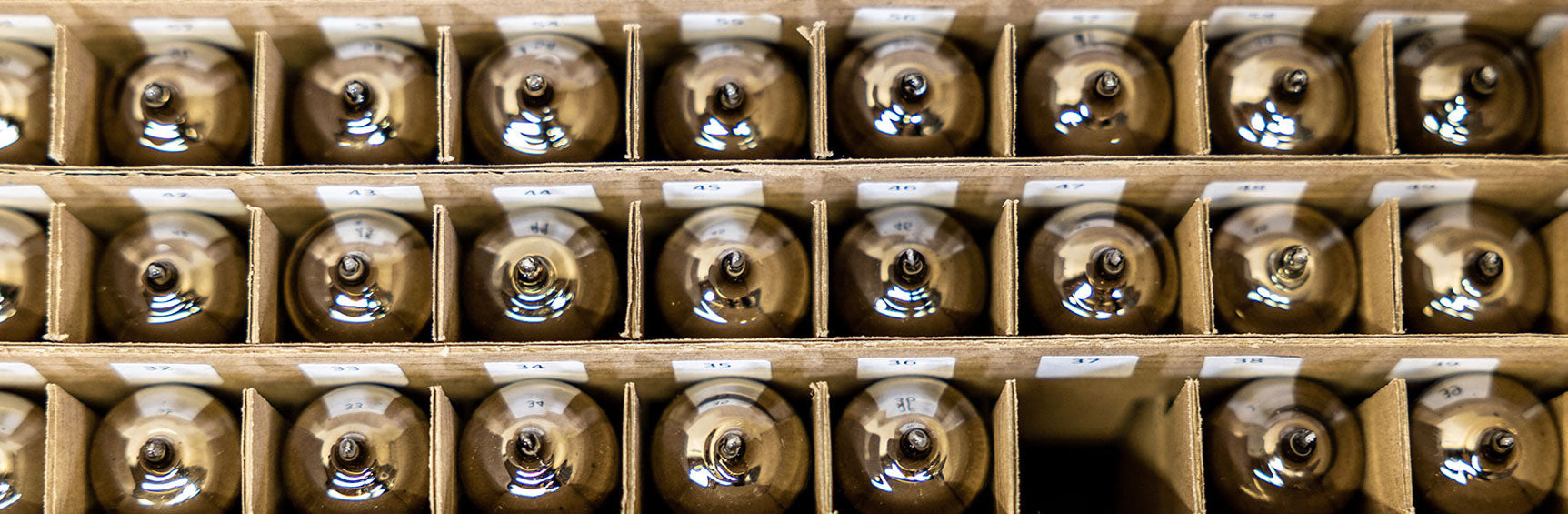
Precision Matching: We match tubes based on plate current and trans conductance, ensuring your power section works in perfect harmony.
-
Burn-in Process: We "stress test" tubes to weed out "infant mortality" failures before they ever reach your amp.
-
Reliability: Whether you are gigging every night or recording your debut album, you can have confidence in your tone.
Replacing your tubes shouldn't be guesswork. By choosing premium power tubes that have been professionally screened, you ensure your amp performs at its peak.
Final Thoughts: Finding Your Signature Sound
The EL34 vs 6L6 debate doesn't have a "right" answer—only the right answer for you.
If you crave the aggressive, mid-heavy roar of a British stack, the EL34 is your best friend. If you want the expansive, glassy, and deep response of a classic American combo, the 6L6 is the undisputed king.
Ready to hear your amp the way it was meant to sound? Whether you need a full guitar amp retube guide or just a fresh pair of matched power tube sets, we have the expertise and the inventory to help you find your voice.
Find the right replacement tubes now and hear the difference that precision-tested glass can make.
FAQ
-
Can I swap EL34s for 6L6s in my amp? In most cases, no. EL34s and 6L6s have different heater current requirements and pin configurations. Unless your amp is specifically designed as "multi-fuel" or has a switch, swapping them requires professional modification.
-
Which tube is better for clean tones? The 6L6 is generally considered superior for clean tones due to its high headroom and shimmering high-end response.
-
Why do Marshall amps use EL34 tubes? Marshall began using EL34s in the 60s because they were readily available in the UK and provided the aggressive midrange "bark" that defined the brand's sound.
-
Do I need to bias my amp after changing power tubes? Yes. Most "fixed bias" amps require a technician to adjust the bias when you install new power tubes to ensure they are running at the correct operating temperature.
-
How long do power tubes usually last? On average, power tubes last between 500 to 1,000 hours of playing time, depending on how hard you "push" the amp.